

New Products

CONTACT US
ADDRESS:
Room 320, Sunshine International Plaza, Luojiang District, Quanzhou City, Fujian Province,China
PHONE:+86-15203564410
EMAIL:
michael@jwayind.com
What Are Bucket Teeth? A Practical Guide for Excavator Owners and Parts Buyers
Bucket teeth are among the most frequently replaced wear parts on any excavator or loader. Mounted on the cutting edge of the bucket, they do the hard work of breaking into soil, gravel and rock — protecting the bucket lip and adapter structure in the process.
Getting the right tooth for the right application is not complicated, but it does matter. The wrong choice leads to faster wear, higher fuel consumption and unexpected downtime.
Main Types of Bucket Teeth
Different working conditions call for different tooth designs. Here are the most common types:
Standard teeth are the default choice for general earthmoving and soft-to-medium soil. They offer a good balance between penetration and wear life.
Rock teeth feature a reinforced body and wider profile, designed to handle hard and abrasive ground conditions without fracturing under heavy impact.
Tiger teeth have a narrow, tapered profile that concentrates force for improved penetration in compact or layered ground.
Rock chisel teeth are built for the most demanding conditions — hard rock, quarry face work and heavy mining applications. Their blunt, chisel-shaped tip resists breakage while maintaining strong penetration force.
In quarry and mining environments, rock chisel teeth are the most commonly specified option for good reason.
Why Tooth Quality Directly Affects Operating Cost
A bucket tooth is a consumable, but that does not mean all teeth are equal. The difference between a well-made tooth and a cheap one shows up quickly in the field.
High-quality bucket teeth typically deliver:
Longer service life under the same working conditions
Better penetration, which reduces fuel consumption per working hour
Lower stress on the adapter and bucket lip, extending their service life
More predictable wear patterns, which makes replacement planning easier
Poor-quality teeth wear unevenly, lose their tip profile quickly and in some cases fracture under heavy load — creating safety risks and unplanned downtime.
The real cost of a bucket tooth is not price per piece. It is cost per working hour.
How to Choose the Right Bucket Teeth
When evaluating bucket teeth, experienced buyers look beyond the unit price. The key factors are:
Material and heat treatment — quality teeth use alloy steel with controlled carbon and manganese content. Heat treatment consistency across a batch matters as much as the specification itself.
Tooth profile and geometry — the right profile for the application improves penetration and reduces unnecessary wear on the body.
Adapter compatibility — bucket teeth must fit the adapter system precisely. Poor fit increases stress concentration and accelerates wear on both parts.
Weight and thickness — these are indirect indicators of material volume, but should always be evaluated alongside hardness and toughness, not in isolation.
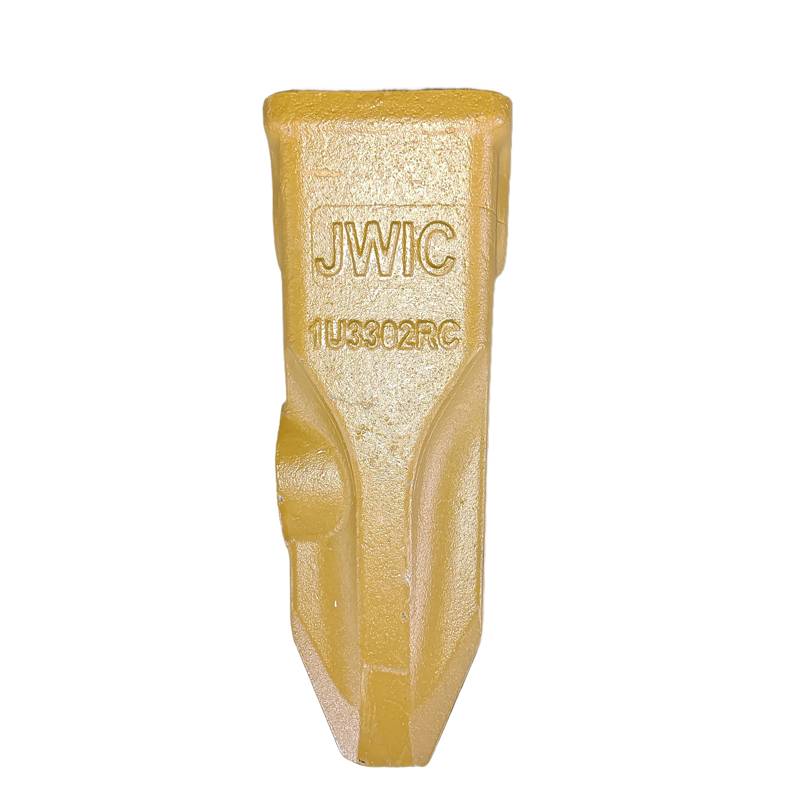
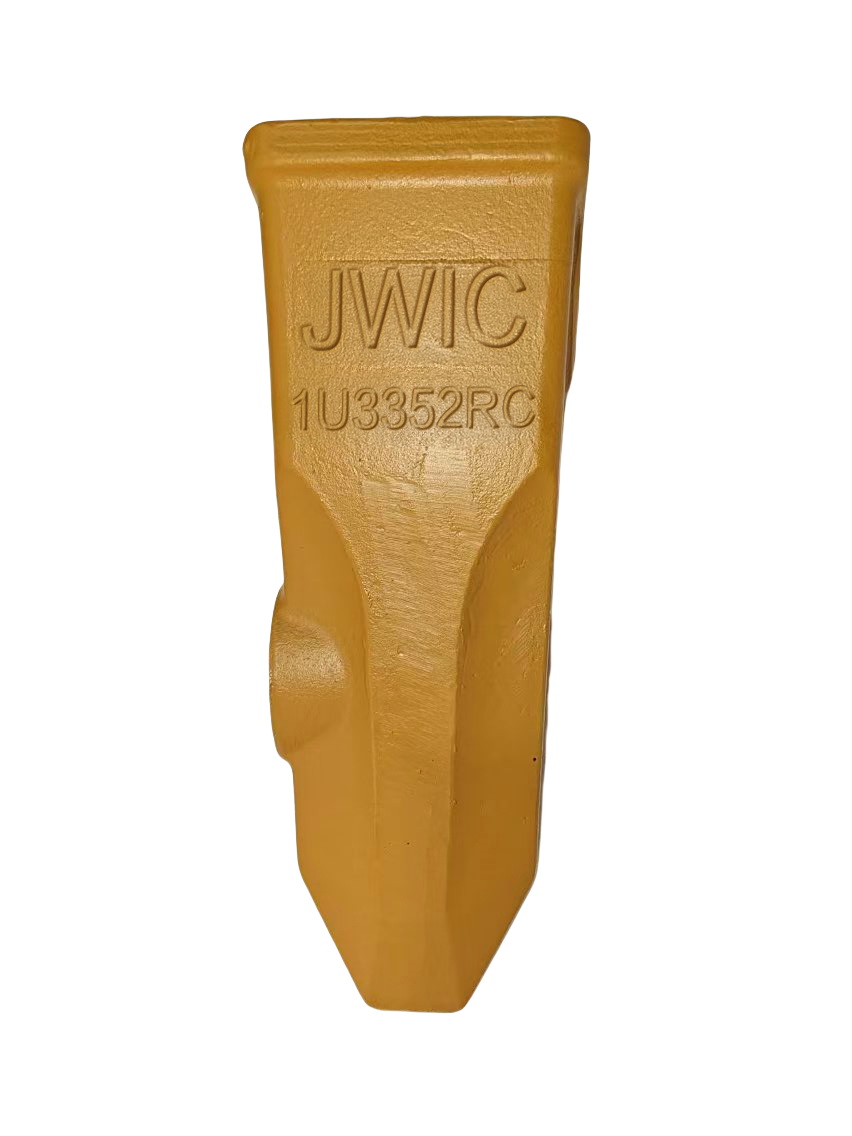
Common models such as 1U3352, 1U3302 and 7T3402 are widely used on Caterpillar equipment and are a useful reference point for compatibility discussions.
A Note on Supplier Selection
Consistent quality is not just about the tooth itself — it depends on the foundry process, heat treatment controls and batch inspection behind it.
When evaluating a supplier, it is worth asking for production process information, material certifications and field feedback from similar applications.
Marketing images are easy to produce. Real shipment photos, test data and application references are more useful.



Quick Navigation
Contact Us
Leave a message